Belgium's Timefold closes $13M Series A to scale vehicle routing and shift scheduling APIs across enterprise applications
Scheduling is one of the most computationally demanding problems in enterprise operations. Assigning thousands of technicians to jobs, creating shift rosters that comply with labour regulations and routing fleets in changing conditions all require optimisation across dozens of simultaneous constraints, such as skills, service-level agreements, travel times, customer availability windows and real-time disruptions. While general-purpose AI tools can produce schedules, they fall short when it comes to consistently satisfying all operational constraints at production scale.
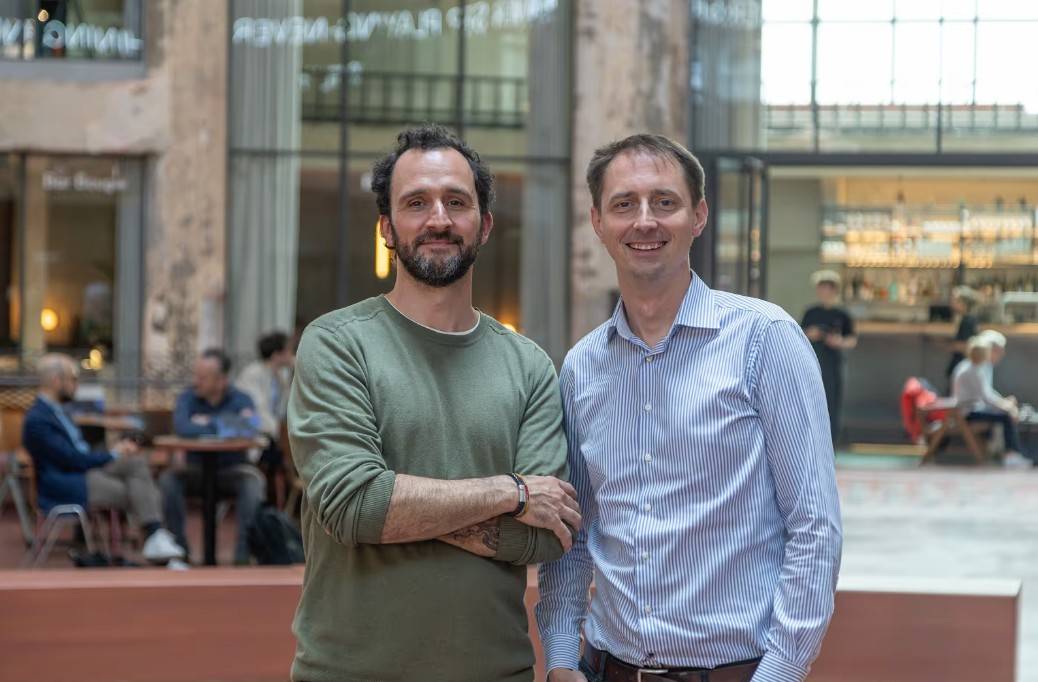
Timefold, a Belgian developer platform co-founded by Maarten Vandenbroucke and Geoffrey De Smet, has built infrastructure for optimising schedules specifically designed for software teams embedding routing and workforce scheduling into enterprise applications. The platform combines AI-powered software with deterministic constraint optimisation algorithms to generate solutions that can withstand real operational conditions. It covers four use cases via dedicated APIs: field service routing, employee shift scheduling, pick-up and delivery routing, and task scheduling. It is available as a cloud platform or as a self-hosted solution. As AI-generated software becomes more prevalent, the platform's premise is that deterministic scheduling optimisation will become foundational infrastructure for the applications built on top of it.
Timefold has just closed a $13 million Series A round, led by Alstin Capital and with participation from Kompas VC, alongside continued backing from existing investors Lakestar and Smartfin. The round follows a €6 million raise in September 2024, bringing total funding to approximately $19 million. The capital will support US expansion and meet the growing enterprise demand for scheduling optimisation infrastructure.
Sources: Timefold | Crunchbase
Founders: Maarten Vandenbroucke, Geoffrey De Smet